The Dearth
A near-future techno-thriller by Mike Jacobs. Out Sunday, December 6, 2026. Everything on this page is free to use in coverage of the book.
Download the full press kit (zip, about 5 MB)The facts
- Title
- The Dearth
- Author
- Mike Jacobs
- Genre
- Near-future techno-thriller
- Publisher
- Olmsted House, Rochester, Minnesota
- Release
- Sunday, December 6, 2026
- Ebook
- $3.99 launch price · ISBN 979-8-9822211-0-0
- Paperback
- $14.99 · 5.5 × 8.5 in. · ISBN 979-8-9822211-1-7
- Audiobook
- $14.99 · full cast, about six hours · ISBN 979-8-9822211-2-4
- Where
- Amazon, Barnes & Noble, and other online stores. Any bookstore or library can order the paperback. The audiobook is on Spotify and other audiobook outlets. It is not on Audible.
- Review copies
- Ebook or paperback, on request. Ask here.
- Rights
- Film and translation rights are available. Contact the author.
Synopsis
Tagline
The money ran. The world blamed China. The truth was worse.
100 words
In 2031 the United States launches Dolly, a digital dollar backed by a proof anyone can check. One August weekend it breaks. A fifth of the money runs, and the world decides China did it.
Amos Reed was a top financial reporter until a true story told too early cost him his name. Now he keeps bees in Minnesota. Two months after the break, the source behind that story drives up his gravel road. Marcus Hale designed Dolly, and his warning about it was buried.
The Dearth is a near-future techno-thriller about a disaster that hid in the public record.
300 words
At 3:14 one morning in 2031, a fifth of the world’s digital dollars moves nine hundred miles east. Nobody asked it to.
The money is Dolly, America’s digital dollar. A mathematical proof of its reserves publishes itself every few minutes, open to anyone. Treasury has called the bank run obsolete. Over one August weekend, the peg breaks anyway. The money runs, and the world settles on a culprit. China did it.
Amos Reed once covered the place where money meets machines for the Wall Street Journal. Then he trusted his best source on a warning with no date attached. The story was true. It was also early, and the correction cost him his name. Now he keeps nine hives on a rented half-acre outside Rochester, Minnesota. He writes a newspaper column and a beekeeping blog a few hundred patient people read.
That source was Marcus Hale, the economist who designed Dolly. In October he drives up Amos’s gravel road. He has done everything right this time. He put his warning in writing and took it to the Inspector General. It went into a drawer, because it threatens the administration’s biggest win.
To follow what Marcus knows, Amos has to work against the story a frightened country has chosen. He has to trust the man who cost him his career. And he has to risk becoming, one more time, the reporter who says the true thing too early.
Told in Amos’s voice and through the reports, testimony, and logs he gathers, The Dearth is a near-future techno-thriller about a catastrophe that was never hidden. Every clue was published. Nobody was looking at that page.
Beekeepers have a word for the late-summer stretch when the flowers quit. The dearth. It is not the disaster. It is the condition.
Early readers
“Terrified, absolutely, but not baffled.”
“I stayed up late reading this one.”
“Highly complicated technical concepts explained so everyone can understand.”
Each reviewer received a free advance copy. More early reviews.

About the author
Mike Jacobs is an engineer and visual artist. He spent his career designing computer chips, writing software, and building blockchain systems. He lives in Rochester, Minnesota. The Dearth is his first novel.
He began as an electrical engineer at IBM and later retired as a Technology Fellow at Optum, where he held patents on distributed-ledger consensus. His fine-art prints are sold at mjacobsfineart.com.
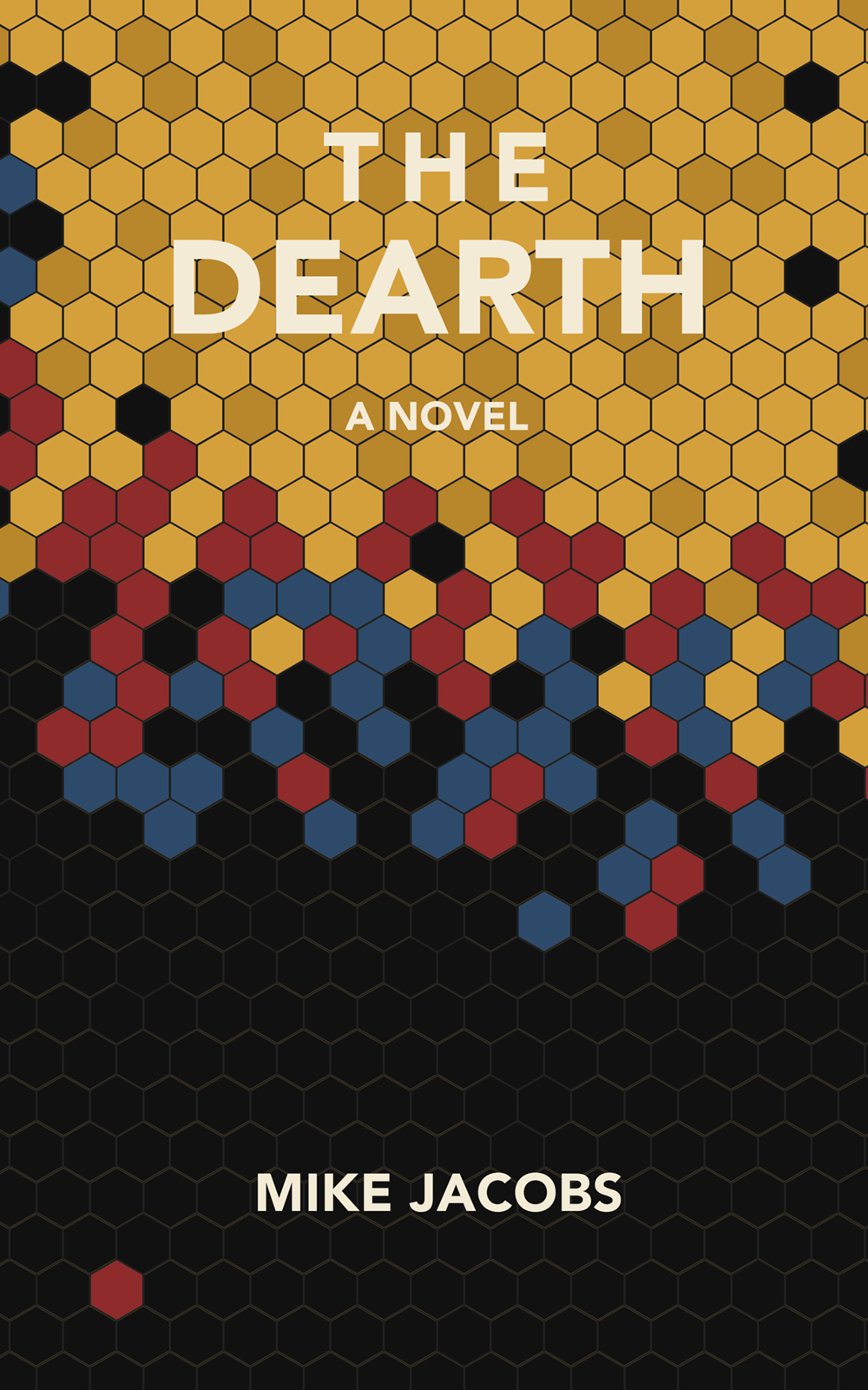
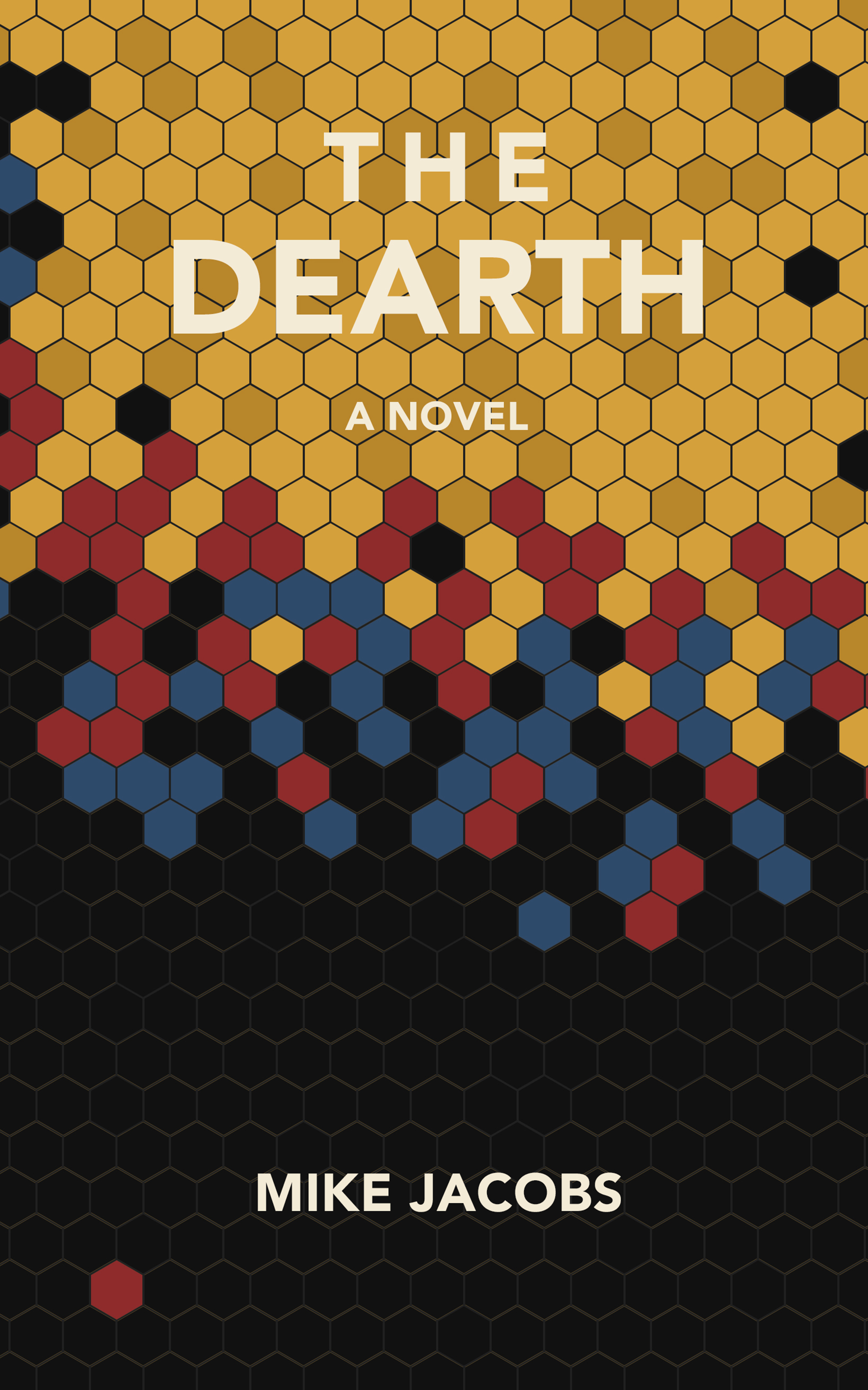
The cover

Video
Interview questions
- What is The Dearth about?
- What inspired you to write a thriller about a digital dollar?
- Why set it in Olmsted County, and why is the narrator a beekeeper?
- What is the dearth, and why is it the title?
- Do I need to understand finance or AI to read it?
- Did you use AI as part of your process?
- How did you produce a full-cast audiobook on your own?
- How much of the technology in the book exists today?
- Why self-publish under your own imprint?
How the book was made
From the note at the front of the book:
“This novel was written with help from AI tools, and I want to be clear about it. The story is mine. I conceived it, I brought the professional background it rests on, and I directed every step of the work. I defined the premise, characters, timeline, and scenes. … I made every creative decision.
Claude and ChatGPT helped me draft, research, structure, and edit the book. Much of the prose was initially drafted with Claude to my specifications and in a writing style built from my own. I then revised it by hand, line by line. The editorial reads, the copyedit, and the continuity checks were also run with AI tools. I accepted or rejected every recommended change. The cover is my own design.”
The audiobook is performed by AI voices, and it says so at the start.
The novel is set in 2031, but much of it stands on real events. What Is Real sorts the real from the invented, with a source for every real entry. No spoilers.
Contact
For interviews, review copies, or anything else, reach Mike Jacobs through the contact page.
Download the full press kit (zip)